A golden spice from an underground stem
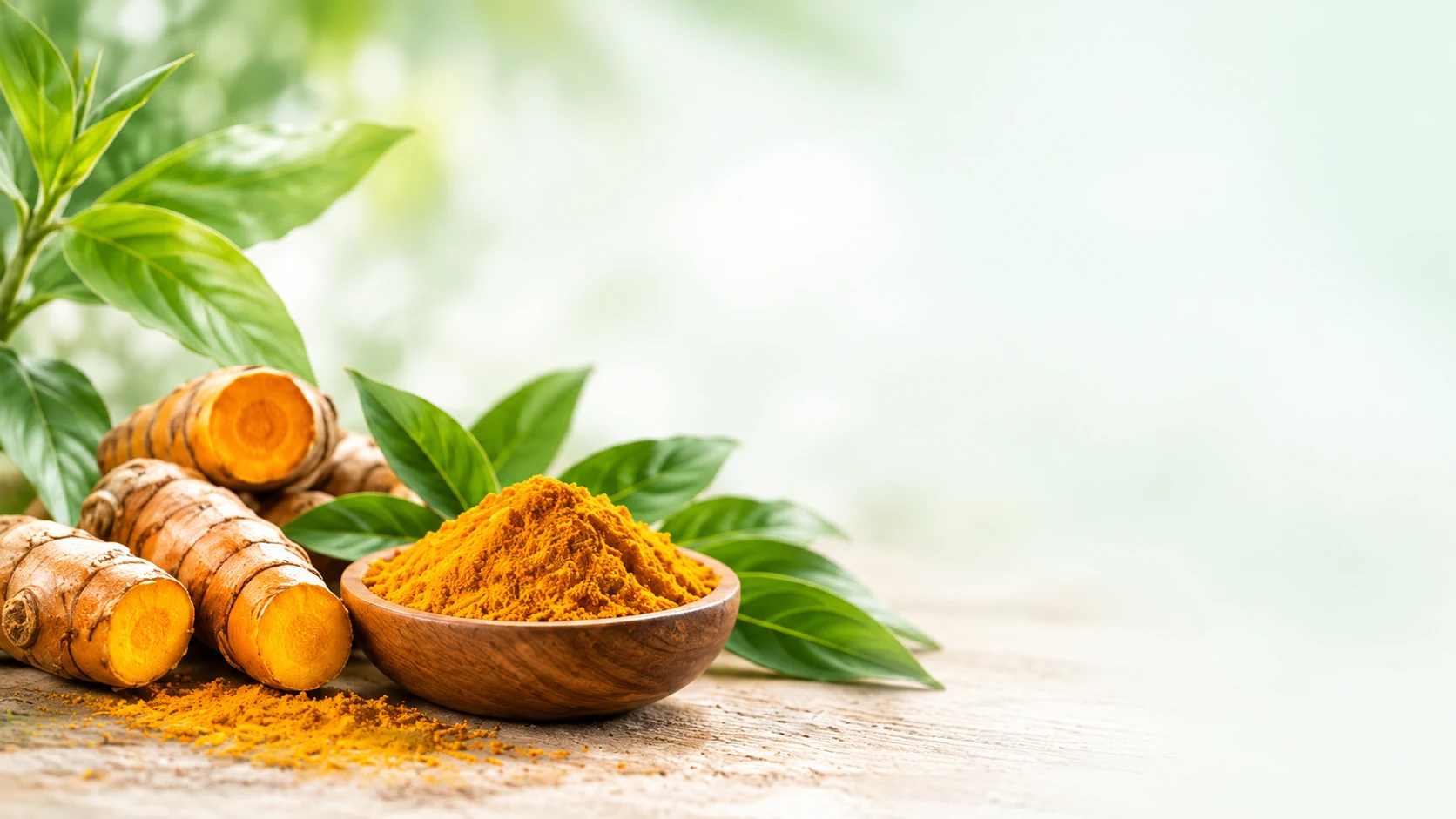
Turmeric is the spice obtained from the rhizome of Curcuma longa, a perennial plant in the ginger family. A rhizome is an underground stem, although shops often call it a root. Fresh rhizomes have orange flesh; the familiar yellow powder is a dried preparation. Curcumin is one of its curcuminoid compounds. Whole turmeric contains a mixture of substances, so turmeric and isolated curcumin are not interchangeable names for the same product. Its long history in cooking and traditional practice explains its popularity, but a history of use does not establish that it treats a disease. 1
Food and supplements are different exposures
Small amounts can add earthy flavour and colour to rice, lentils, vegetables or soups. Fresh turmeric, a seasoning powder and a capsule of concentrated extract can deliver very different amounts of curcuminoids. A beverage with an unknown quantity of powder is not a standardized treatment either. Choosing turmeric for taste does not require trying to reproduce a trial dose. There is no universal supplement dose established by the evidence discussed here, and this article does not prescribe one.
What a clinical trial actually showed
A randomized, placebo-controlled trial published in 2020 followed 70 people with knee osteoarthritis for 12 weeks. A particular Curcuma longa extract produced a modest improvement in pain compared with placebo, but did not improve the measured joint effusion-synovitis or cartilage composition. The sample was small and the follow-up short. These findings concern the studied extract and population; they do not prove that ordinary seasoning repairs cartilage, prevents arthritis or replaces established care. A positive pain result also does not establish lasting benefit or safety over years. 2
More absorption does not automatically mean more benefit
Curcumin is poorly absorbed in ordinary preparations. An original study in healthy volunteers found that adding piperine changed curcumin exposure in the blood. That is a pharmacokinetic observation, not proof of better clinical outcomes. Concentrated piperine, enhanced-absorption formulations and a pinch of pepper in a meal are different exposures. A product marketed as more bioavailable still requires its own evidence of benefits, interactions and safety. 3
Safety deserves the same attention as possible benefit
An original Drug-Induced Liver Injury Network case series described ten cases of liver injury associated with turmeric products, including severe cases. A case series cannot calculate how often this happens among all users, nor does it mean ordinary seasoning carries the same risk as a concentrated supplement. It does show that natural origin is not a guarantee of safety. Stop a suspected supplement and seek prompt medical assessment for yellow skin or eyes, dark urine or marked new illness. 4
Ask a clinician or pharmacist before using an extract if you take anticoagulants, receive cancer treatment or take immunosuppressive medicines, or if surgery is planned. A published report described a probable interaction with fluindione, a vitamin K antagonist; one report is a warning signal, not a precise estimate for every medicine. 5 A small volunteer study also found gallbladder contraction after curcumin. People with gallstones or bile-duct obstruction should discuss concentrated preparations with their clinician rather than using them to manage symptoms. 6
Pregnancy, breastfeeding, childhood, liver disease and previous reactions require additional caution; do not start concentrated preparations without appropriate advice. Digestive discomfort and allergic reactions are possible. Keep a list of the actual product and all medicines: the exact ingredients matter more than the word natural on a label.
A useful place in the kitchen, realistic expectations
Turmeric can be enjoyed as a food ingredient within a varied diet. Read supplement labels carefully, resist claims of a cure or detox, and do not change prescribed treatment because of a spice or extract. The practical distinction is between culinary enjoyment and a concentrated product with uncertain long-term benefits and meaningful safety questions.
Summary
Turmeric in food differs from concentrated curcumin supplements. Explore its botanical identity, limited clinical evidence, interactions and important safety signals.
Important note
Concentrated turmeric or curcumin products can cause liver injury and may interact with medicines; seek professional advice before use. Stop a suspected supplement and seek prompt assessment for jaundice, dark urine or marked new illness. Do not start concentrated preparations unsupervised during pregnancy or breastfeeding, in children, or with liver disease, gallstones or bile-duct obstruction.
This article provides educational information and does not replace advice from a qualified healthcare professional.
Sources and references
- Liver Injury Associated with Turmeric--a Growing Problem: Ten Cases from the Drug-Induced Liver Injury Network [DILIN] · Read source — The American Journal of Medicine
- The effect of curcumin and placebo on human gall-bladder function: an ultrasound study · Read source — Alimentary Pharmacology & Therapeutics
- Probable interaction between an oral vitamin K antagonist and turmeric (Curcuma longa) · Read source — Thérapie
- Influence of piperine on the pharmacokinetics of curcumin in animals and human volunteers · Read source — Planta Medica
- Effectiveness of Curcuma longa Extract for the Treatment of Symptoms and Effusion-Synovitis of Knee Osteoarthritis: A Randomized Trial · Read source — Monash University research record; Annals of Internal Medicine
- Turmeric Benefits · Read source — Johns Hopkins Medicine